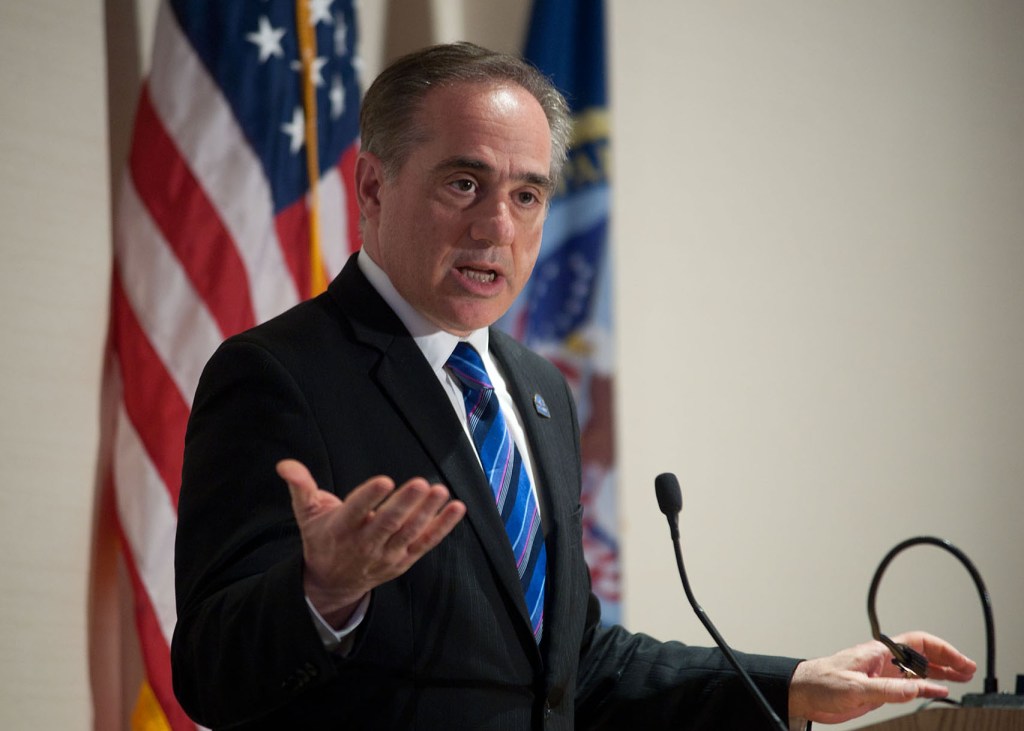
While an ongoing battle over how the Department of Veterans Affairs best holds its employees accountable wages on Capitol Hill, VA Under Secretary for Health Dr. David Shulkin sought to show what reform progress has already been made.
“In my view, VA has always had really excellent strategy,” he said. “Our problem has really been in execution of the strategy, so that’s where our focus has been this past year.”
Shulkin appeared at the United Veterans Council’s VA health summit on June 21 and outlined a series of initiatives and some silver linings that have resulted from a series of scandals that have plagued the agency for the better part of two years.
The United Veterans Council, a component of the AFL-CIO, held the summit in partnership with the Roosevelt Institute to examine what the future of the health system will ultimately be. It also provided a counterpoint to the fierce criticism currently surrounding agency, as well as efforts to privatize its medical care.
Addressing the issue that plunged VA into controversy in the first place — lengthy wait times for veterans seeking health care — Shulkin talked about the agency’s commitment to its Declaration of Access, a document ensuring beneficiaries certain promises of care, some by the end of the year.
“[It’s] the principles that we are putting in place in VA that we are committed to make sustainable improvements in access so that we won’t ever find ourselves in a wait-time crisis,” he said.
Those assurances include a commitment to same-day access to primary and mental health care in all VA medical centers.
Shulkin said initiatives like the agency’s integrated operations center have allowed the VA to monitor progress on new goals throughout the system. And analytic tracking also showed how the agency’s push to improve urgent care access needed whittle down a backlog of urgent consults.
“It’s almost unbelievable, but prior to November, we couldn’t even measure clinical urgency,” he said.
The consults, which had been on the books for more than a month, totaled more than 56,000 in November. After redirecting resources to tackle the issue, Shulkin said the number of veterans still waiting for urgent care is more like 1,525 today.
As a result of the initiatives, Shulkin added that 89 percent of veterans said they were now satisfied with their access to VA care.
“I would put that up against any private-sector organization,” he said.
The VA is also expanding its use of telehealth services to reach veterans far from its medical centers. Shulkin said more than 700,000 veterans were now receiving telehealth care and the VA system was processing more than 2.1 million episodes.
The agency is also moving forward with a series of system updates, including the Veterans Appointment Request app — which would allow veterans to schedule appoints from their smartphones — and the Veteran Schedule Enhancement on the agency side to better manage appointments.
Internally, Shulkin said that VA is working to develop best practices and better employee engagement. He said that leadership utilized a “Shark Tank” type exercise where medical center directors accepted best practices submissions throughout the next work and judged which ones they wanted to expand to different components.
There is also ongoing leadership development training that has included 14,000 Veterans Health Administration executives. Shulkin added that engagement efforts are slowly starting to show some promise.
Finally, he said that the VA would use analytics tools to track patient outcomes through its integrated operations center to ensure care is being adequately rendered for veterans.
Ultimately, Shulkin said the biggest goal for the VA is restoring trust to the veterans it serves.
“We don’t have a stock price. We don’t make money when we don’t save money for veterans,” he said. “Our whole currency is whether we have earned the trusty of our veterans. This is something that we are very focused on.”